
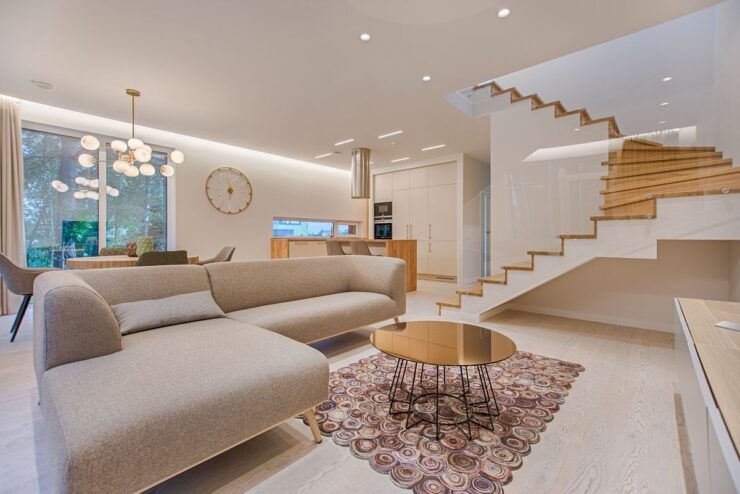
Quick Answer: The most effective way to refresh your living room on a tight budget is rearranging and editing what you already own before buying anything new, then adding one or two low-cost focal changes, a feature wall, new cushions, updated lighting, rather than replacing furniture. This approach captures most of the visual impact of a full redecoration at a fraction of the typical £14,000 average UK renovation budget.
A living room refresh doesn’t need anywhere close to the £14,000 average UK homeowners now budget for renovations to genuinely feel new again. Learning to refresh your living room on a tight budget starts with a principle most people skip entirely: working with what’s already in the room before spending anything on what’s not.
The Budget Refresh Hierarchy
| Step | Cost | Impact |
|---|---|---|
| Declutter and rearrange furniture | Free | Often the single biggest visual change available |
| Deep clean surfaces and soft furnishings | Free–£20 | Restores a “newer” look to existing items |
| Add or swap cushions and throws | £20–£60 | Refreshes colour scheme without replacing furniture |
| Repaint one feature wall | £25–£40 | Adds a focal point at a fraction of full-room cost |
| Update lighting (lamps, bulbs) | £20–£70 | Changes mood and warmth significantly |
| Add greenery or artwork | £10–£50 | Fills visual gaps and adds life to the space |
A realistic sub-£250 refresh sequence, cheapest and highest-impact steps first.
Working Around Rented Accommodation Restrictions
Renters facing restrictions on painting or drilling can still capture most of this refresh through furniture rearranging, textiles, freestanding lighting, and removable adhesive hooks for artwork, all of which achieve a similar visual effect without breaching a typical tenancy agreement. Checking the specific tenancy terms before any wall-based change avoids an unnecessary dispute with a landlord over an otherwise reasonable improvement.
Why Rearranging Comes Before Buying Anything
Simply moving existing furniture into a better layout, pulling a sofa away from the wall, angling a chair toward natural light, is entirely free and often produces a more noticeable transformation than a new cushion or throw. Most living rooms settle into a layout by default rather than deliberate choice, which means there’s usually real improvement available before spending a single pound.
Taking a photo of the room from the doorway before rearranging, then comparing it against a photo taken after, is a genuinely useful way to see the change objectively, since it’s easy to underestimate how much a room has improved when you’ve been looking at the incremental changes in person the whole time.
The Power of a Genuine Declutter
Removing items that have accumulated without any real purpose, old magazines, unused ornaments, cables without a clear home, does more to make a room feel refreshed than most people expect, since visual clutter is one of the most common reasons a room feels tired despite nothing actually being wrong with the furniture or decor itself.
One Feature Wall Instead of a Full Repaint
Painting a single wall in a bolder colour or a textured finish costs a fraction of repainting an entire room, while still creating a genuine focal point. This approach also carries less risk if the colour choice doesn’t work out exactly as hoped, since only one wall needs repainting rather than an entire room’s worth of coverage.
Textiles as the Fastest Colour Refresh
Cushions, throws, and a new rug are the quickest way to shift a room’s colour palette without touching any furniture or paint at all. Charity shops and marketplace listings are worth checking specifically for these items, since textiles in good condition are common secondhand finds and considerably cheaper than buying new.
Lighting Layers on a Genuinely Tight Budget
A single overhead light creates a flat, often unflattering ambiance, while adding even one inexpensive floor or table lamp creates layered lighting that reads as considerably more considered and cosy. Warm-toned LED bulbs cost little more than standard ones and make an outsized difference to how welcoming a room feels in the evening specifically.
Positioning a single lamp in a previously dark corner does more for a room’s overall feel than adding several lights to already well-lit areas, since it’s the dark, neglected corners that tend to make a whole room feel smaller and less finished than it actually is.
Where Secondhand Genuinely Beats New
Given that furniture bought secondhand typically costs around 70% less than buying new, and much of the furniture entering resale markets is barely used, checking secondhand platforms before any new purchase for a living room refresh is one of the more financially sensible habits available, particularly for larger items like armchairs or coffee tables.
Local pickup-only listings, rather than delivery-included ones, tend to offer the steepest discounts, since sellers wanting a quick clearance often price generously to avoid the hassle of arranging delivery themselves. A car boot or a friend with a larger vehicle for one afternoon can unlock some genuinely excellent bargains this way.
Setting a Realistic Budget Ceiling Before Shopping
Deciding on a specific total budget before browsing anything, rather than adding items to a basket and totalling up at the end, keeps a tight-budget refresh genuinely tight. It’s easy for a series of individually small, reasonable-seeming purchases to add up to considerably more than intended without a clear ceiling agreed in advance.
Key Takeaways
- Rearrange and declutter existing furniture before spending anything; this is often the single biggest free improvement.
- A single feature wall costs a fraction of a full repaint while still creating a genuine focal point.
- Textiles (cushions, throws, rugs) refresh a colour scheme fastest without touching furniture or paint.
- Layered lighting with warm-toned bulbs transforms evening ambiance for a genuinely small outlay.
- Check secondhand platforms first; furniture there typically costs around 70% less than buying new.
Conclusion
Most of a living room’s tired feeling comes from clutter and a stale layout rather than genuinely worn-out furniture, which is exactly why a free rearrange should always come before any spending. For more specific weekend projects to layer on top of this refresh, our 10 weekend DIY projects that transform any room is a natural next read.
And our before and after room makeover for under £100 shows exactly this budget hierarchy applied to a complete room transformation.
A living room that feels genuinely refreshed doesn’t require matching a magazine spread; it just needs the clutter cleared, the layout reconsidered, and one or two deliberate touches added on top.
Frequently Asked Questions
What’s the very first step in a budget living room refresh?
Decluttering and rearranging existing furniture, entirely free steps, typically produce the most noticeable initial improvement before any money is spent.
Is it worth painting a whole room or just one wall on a tight budget?
A single feature wall costs considerably less than a full room repaint while still creating a genuine focal point, making it the more budget-efficient choice for most tight-budget refreshes.
How much does secondhand furniture typically save compared with new?
Secondhand furniture typically costs around 70% less than buying new, making it a genuinely significant saving for larger items like sofas, armchairs, and coffee tables.
What’s the cheapest way to change a room’s overall mood?
Swapping to warm-toned lighting and adding a lamp or two for layered light is one of the cheapest, highest-impact mood changes available for a living room.
Should I buy new cushions or reupholster existing ones?
New or secondhand cushion covers are typically far cheaper and faster than reupholstering, and achieve most of the same visual colour-refresh effect for a fraction of the cost.



Add comment