
My garden looked genuinely awful for years. Not in a charming, wild-and-naturalistic kind of way — just in a neglected, patchy, “I’ll deal with it when I have time” kind of way. The problem wasn’t that I didn’t care. It was that every approach I tried seemed to demand constant attention, and life kept getting in the way. Sound familiar?
The turning point, honestly, was accepting that I was never going to be the sort of person who potters contentedly in the garden every Saturday morning. I needed easy garden ideas. Not “mow the lawn and call it a day” easy, but genuinely low-maintenance garden ideas that would still look good in January, not just in the middle of June. Ideas that rewarded a bit of upfront effort with months or years of decent results.
These ten are the ones that actually delivered. Some I stumbled into. Some came from embarrassing failures with things I’d tried before. All of them are doable without a horticultural degree, a huge budget, or a free weekend every fortnight.
1. Give Perennials a Proper Chance
Here’s the thing about perennials that nobody really tells you clearly enough: they’re slow. The first year, you plant them, they sit there looking a bit sorry for themselves, and you start wondering if you’ve killed them. You haven’t. They’re underground, doing something important.
By year two, they’re bigger. By year three, they’re the garden. Echinacea, salvia, geranium, rudbeckia, verbena bonariensis — any of these will come back reliably every single year, expand gradually to fill the space, and flower for months without you doing anything much beyond cutting them back in late winter. Compare that to bedding plants, which you’re replanting every spring and replacing every autumn, and you start to understand why perennials are the sensible choice.
Layer by height and by season and you’ll have something happening in the border from March through to November. Spring bulbs tucked between the perennials while you’re planting them adds another two months to the display without any extra work. The RHS perennial plant finder is the most useful tool I’ve found for identifying varieties that genuinely suit your soil and aspect rather than just the ones that look good on a plant label.

2. Ditch the Grass Paths
Grass paths between beds look lovely in a magazine. In a real garden, in a real British summer, they’re a constant source of minor irritation. Too narrow to get a mower through properly. Prone to muddy patches in wet weather. A magnet for weeds at the edges where the grass meets the soil.
Gravel or bark mulch instead. That’s it. Lay a weed-suppressing membrane first, tip the gravel or bark on top, and you’ve removed an entire category of garden maintenance. Gravel drains better, looks neater, and suits contemporary or Mediterranean-style planting. Bark is softer underfoot, retains moisture around plant roots, and works beautifully in a more informal, cottage-garden setting. Both need a light top-up every year or two. That’s all.
The upfront cost is more than reseeding a worn grass path, but you’ll never regret it. Not once.
3. Get at Least One Ornamental Grass
I resisted ornamental grasses for longer than I’d like to admit, mostly because I thought they looked a bit corporate — the kind of thing you’d see outside an office block in a roundabout. I was wrong. In an actual garden, they’re extraordinary.
They move. That’s the thing. On any day with a bit of a breeze, an ornamental grass has a life to it that no other plant quite matches. In autumn they go amber and copper, winter the seed heads catch frost and hold their structure when everything else around them is flat and brown. In February, when the garden is at its most depressing, a clump of Miscanthus or a stand of Stipa is still doing something interesting.
Miscanthus sinensis is the reliable workhorse — grows to about 1.5 metres, produces feathery plumes in late summer that last well into winter. Stipa gigantea catches afternoon light in a way that makes it look far more expensive than it is. Both tolerate dry conditions easily once established. Cut them back hard in late February and they’ll sort the rest out themselves.
4. Raise a Small Herb Bed Near the Kitchen
This was the first proper garden project I did that actually worked, and it still makes me disproportionately happy every time I walk past it. A small raised bed, just outside the back door, planted with rosemary, thyme, sage, lavender, and a bay tree in the corner. It looks good twelve months of the year. It smells incredible on a warm evening. And I use it all the time when I’m cooking, which makes me feel genuinely virtuous.
The raised bed part matters, especially if your garden has heavy clay soil like mine does. Herbs absolutely hate sitting in wet soil over winter — rosemary in particular will just quietly rot if the drainage isn’t right. A raised bed filled with a gritty, free-draining mix solves that entirely. Timber sleepers, galvanised metal, even a stack of old bricks — any of it works. The structure also adds height and interest to a flat garden, which is a bonus.
If you’re not sure where to start with growing herbs, BBC Gardeners’ World has a straightforward herb-growing guide that covers sowing, harvesting, and which varieties behave themselves without turning into a sprawling nuisance.
5. Add Evergreen Shrubs Before You Do Anything Else
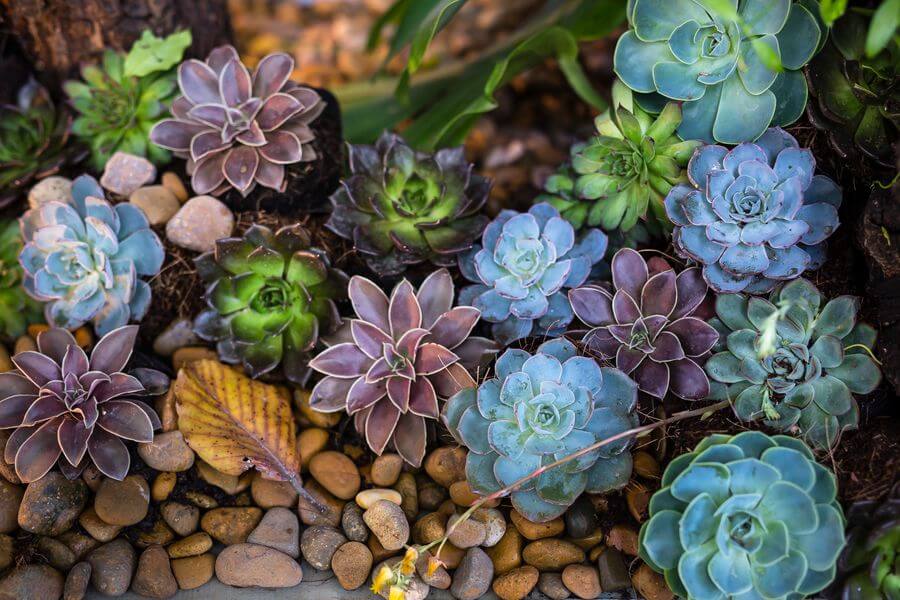
If I could go back and give myself one piece of advice before I started the garden, it would be this: plant your evergreen shrubs first, before anything else, and plant more of them than you think you need. Everything else — the perennials, the grasses, the containers — grows in around them. They’re the skeleton. Without a skeleton, a garden in January looks like a crime scene.
Pittosporum, Viburnum tinus, Sarcococca, Ilex crenata — any of these will hold structure and colour through the coldest months and ask almost nothing of you in return. Sarcococca is the one I’d push hardest. It’ll grow happily in a north-facing shaded corner where nothing else wants to live, and from December through February it produces tiny white flowers with a scent so powerful and sweet it stops you in your tracks every time you walk past. In the middle of winter. That’s remarkable, and it gets almost no attention.
Steer clear of box (Buxus) for the time being if you can — box blight and box tree moth have made it a genuinely difficult plant to grow reliably in most UK gardens. Ilex crenata gives you the same tight, clippable habit without the same headaches.
6. Put In Some Water, Even If It’s Very Small
I’m not talking about a pond, necessarily. Though if you have the space, a pond is one of the single most transformative things you can do for a garden, and it’s far easier to install and maintain than most people assume. But even a self-contained millstone bubbler, a glazed pot with a small pump in it, or a wall-mounted spout into a shallow trough will change how the garden feels completely.
Water brings sound. It brings movement, light reflection and wildlife — birds use even the smallest water feature for bathing, and hedgehogs will find it for drinking faster than you’d think possible. It also, and I’ve never quite been able to explain this scientifically, makes a garden feel more alive than it does without it. Something to do with the constant gentle noise drowning out the ambient hum of everything else, possibly.
The running costs are minimal. A small pump uses less electricity than a phone charger. Worth it. And while you’re thinking about making the most of your outdoor space, our guide on getting your garden summer-ready with rattan furniture is worth a look — good furniture choices make a genuine difference to how much time you actually spend out there.
7. Stop Ignoring Your Walls and Fences
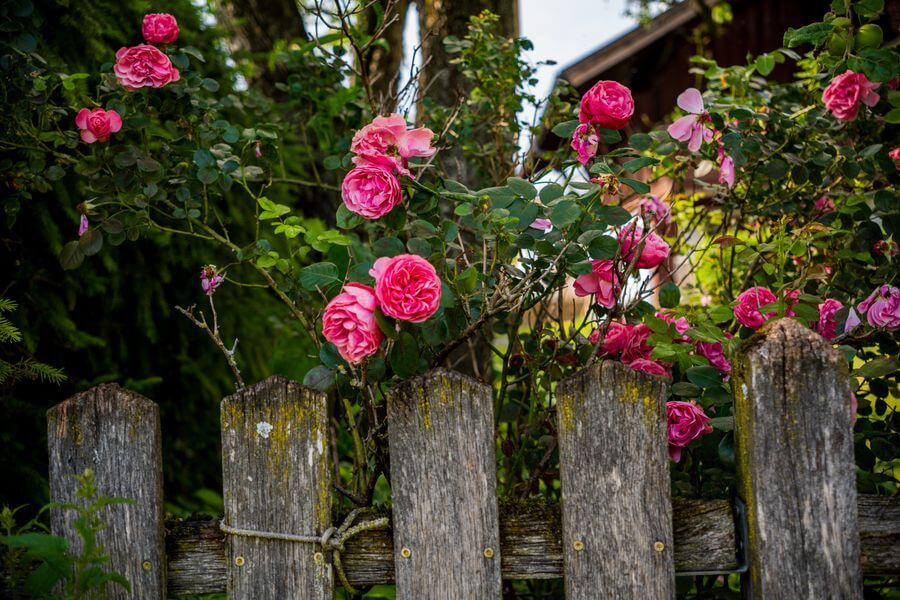
Every bare wall or fence is wasted vertical space. In a small garden especially, vertical planting is how you create the impression of abundance without actually having the square footage for it. A climber will cover a 6-foot fence panel within two or three seasons and give you colour, fragrance, and interest at exactly the height where you notice it most.
Clematis is the one I’d recommend first, purely because there are varieties flowering from April through to October and you can easily have two or three different ones on the same fence, handing off from one to the next through the season. Hydrangea petiolaris for a dark north-facing wall — it’s slow to get going but completely unstoppable once it does, and the white lacecap flowers in early summer are genuinely beautiful. For fragrance, nothing really beats a climbing rose, even though they need more pruning attention than the others.
Before you plant anything, spend twenty minutes fixing horizontal wires to the fence at 30-centimetre intervals. It is the most boring twenty minutes you’ll spend in the garden all year. It will save you years of awkward tying-in later.
8. Think Bigger With Your Containers
This sounds counterintuitive, especially if budget is a consideration, but bigger containers are almost always the better choice. A small pot dries out within 48 hours in a warm spell and needs watering constantly — which is exactly the kind of daily maintenance that most of us don’t have time for. A large pot, well planted, holds moisture for far longer and makes a much bolder visual statement against a wall or entrance.
The approach I’ve settled on is this: one tall structural plant in the middle (a standard bay, a clipped Pittosporum, or an architectural grass depending on the time of year), something trailing at the edges, and one seasonal flowering plant in between that gets swapped out four times a year. Spring bulbs, summer annuals, autumn sedums, winter pansies or hellebores. The structural framework stays put and does the hard work. You’re just changing the middle bit.
A pair of large containers flanking a front door or gate lifts the entire entrance to a house in a way that’s slightly out of proportion to the effort and cost involved. It’s one of those things where the impact is immediate and obvious, and you wonder why you didn’t do it sooner.
9. Leave a Corner Wild on Purpose
There’s a particular kind of garden guilt that comes with the corner you haven’t got round to yet. The bit behind the shed, or the strip along the back fence that never quite comes together. Here is my suggestion: stop feeling guilty about it and start calling it a wildlife corner instead. Because that’s what it wants to be, and the garden will thank you for letting it.
A log pile in a shaded corner costs nothing and provides habitat for beetles, slow worms, and hedgehogs. A patch of wildflowers — ox-eye daisies, cornflowers, field poppies — sown into a small area of bare soil will be buzzing with bees and hoverflies from May through September and will look genuinely lovely doing it. Leave the seed heads on your perennials over winter instead of cutting everything back in October, and you’ll be providing food for birds through the coldest months while also saving yourself an afternoon of work.
If you want to go further with wildlife-friendly planting and turn your garden into something that genuinely supports local biodiversity, Garden Organic’s wildlife gardening guide has specific plant lists and practical habitat ideas for plots of all sizes — it’s one of the most genuinely useful resources I’ve come across.
10. Light It Properly After Dark
A garden that’s only nice in daylight is only working half the time. In summer especially, when the evenings are long and warm, the garden after dark can be better than the garden at noon — softer, quieter, more atmospheric. But it only works like that if the lighting is right.
Solar garden lights have improved enormously. Not the feeble, bluish, dim-by-9pm ones from a few years back — proper warm-white solar stake lights and spike spotlights that hold a charge through the night and look attractive during the day as well. Train a spike spotlight up through the branches of a tree or an ornamental grass and it’s a completely different garden after dark. Fairy lights along a fence or through a pergola create warmth and atmosphere for the cost of a few hours’ electricity a week.
Keep the colour temperature warm — 2700K to 3000K. Avoid the bright white/blue lights that make a garden look like a supermarket car park. Less is more. Three well-placed lights will always outperform twelve scattered ones. For more ideas on transforming your outdoor space and home, browse the home and gardening section at Funky Colour — there’s a lot more to explore.
A Few Honest Notes
Things I wish someone had told me before I started:
- The first year of any perennial planting looks disappointing. This is normal. Don’t panic, don’t replant. Just water it through dry spells and leave it alone.
- Soil matters more than plants. An hour improving your soil before planting will do more for your garden than any amount of expensive plant purchases.
- You will make mistakes. Everyone does. The garden doesn’t hold grudges — you just dig it up and try something different the following season.
- Watch the space before you spend on it. Where does the sun sit in the morning versus the afternoon? Where does the frost lie longest in winter? Where does water pool after heavy rain? Ten minutes of observation saves a lot of wasted money.
Conclusion
Here’s what I’ve learned after years of getting this wrong before started getting it right: a garden that looks good all year round isn’t necessarily more work than a garden that looks good in July. It’s just different work, done at the beginning. The right structure. The right plants in the right places. A few elements that carry interest through the seasons nobody normally bothers to plan for.
Pick one of these ten ideas and do it properly before you move on to the next. A half-done garden is more demoralising than a simple one. Start with whatever appeals most — or whatever your garden needs most urgently — and let it settle before you add anything else.
Gardens are slow. That used to frustrate me. Now I think it’s the best thing about them.