Quick Answer: Genuinely fast 30-minute weeknight dinners rely on a handful of core techniques, one-pan cooking, pre-chopped or frozen veg, and recipes with five or fewer main components, rather than any single magic recipe. With WRAP data showing UK households waste food worth around £470 a year largely from over-buying and over-cooking, planning a rotating shortlist of proven fast dinners also directly reduces waste alongside saving time.
Getting a proper meal on the table in half an hour, five nights a week, without reaching for a ready meal every time, comes down to a genuinely small set of 30-minute weeknight dinners techniques rather than an ever-expanding recipe collection. I used to think the answer was finding more recipes; it was actually the opposite; narrowing down to about eight reliable, genuinely fast dinners and rotating them solved the nightly “what’s for dinner” scramble far more effectively than any new cookbook ever did.
The Core Techniques That Make 30 Minutes Realistic
| Technique | Time Saved | Example Dinner |
|---|---|---|
| One-pan cooking | No extra pots to wash, less active time | Sheet-pan sausages and roasted vegetables |
| Pre-chopped or frozen veg | 5–10 minutes of prep eliminated | Stir-fry with frozen mixed vegetables |
| Five-ingredient recipes | Less decision-making and shopping time | Tomato and chorizo pasta |
| Batch-cooked base sauces | Only assembly needed on the night | Bolognese from a frozen base sauce |
| One dominant protein, simple sides | Reduces total cooking steps | Pan-fried chicken with rice and peas |
Combining two or more of these techniques in a single recipe is what actually gets dinner under 30 minutes reliably.
Knife Skills That Genuinely Save Time
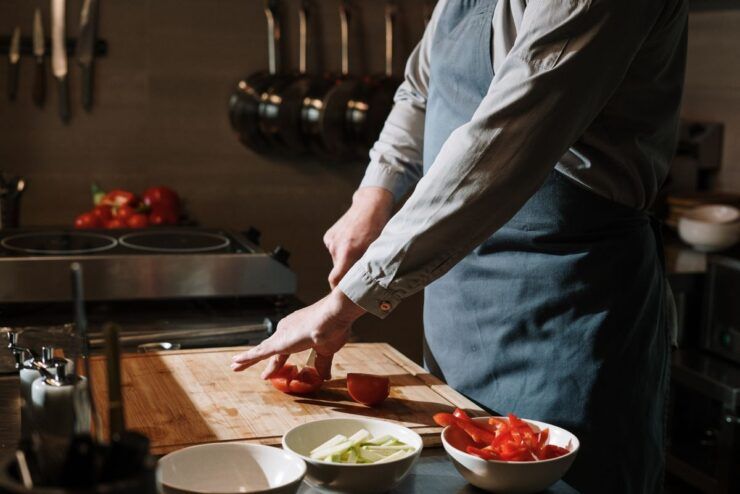
A sharp knife cuts vegetables meaningfully faster and more safely than a dull one, since less pressure is needed and there’s less risk of the blade slipping. Sharpening kitchen knives regularly, something many home cooks never do at all, is a small, free habit that pays off every single time chopping is involved in a fast dinner, which is most nights.
Why Most “Quick” Recipes Still Take 45 Minutes in Practice
A recipe’s stated cooking time rarely includes prep, and prep is exactly where most home cooks lose the extra fifteen minutes that turns a “30-minute meal” into a 45-minute one. Recipes that specifically minimise chopping, slicing, and multiple pan changes are the ones that actually hit their stated time, which is why the techniques above matter more than the specific recipe itself.
It’s worth timing yourself honestly once or twice, from opening the fridge to plating up, rather than trusting a recipe’s stated time at face value. This kind of honest audit often reveals that a specific, repeatable step, dicing onions finely, for instance, is consistently where the real time goes, which makes it much easier to target that exact bottleneck rather than vaguely trying to “cook faster” overall.
Stocking a Pantry That Supports Genuinely Fast Cooking
A well-stocked base of tinned tomatoes, stock cubes or bouillon, a couple of dried pasta shapes, rice, and a handful of reliable spices means a fast dinner rarely depends on a last-minute shop for a single missing ingredient. Building meals around what’s reliably in the pantry, rather than needing fresh, specific ingredients every single time, removes one of the more common hidden delays in weeknight cooking.
Building a Rotating Shortlist Instead of a Recipe Collection
Having roughly eight to ten proven fast dinners on rotation, rather than constantly searching for new ones, removes the nightly decision fatigue that often leads to an expensive last-minute takeaway. A rotation this size provides enough variety to avoid boredom while staying small enough that the shopping list becomes genuinely familiar and efficient week to week.
Writing this shortlist down somewhere visible, on the fridge, in a notes app, rather than trying to hold it in memory, makes an enormous practical difference. The point at which most households abandon meal planning isn’t a lack of good recipes, it’s simply forgetting what’s on the list at exactly the moment a decision needs to be made, usually at the end of a long day with limited mental energy left for creative thinking.
Prepping Ingredients in Advance Without Full Meal Prep
Washing and chopping vegetables for the week during a Sunday session, without committing to fully cooked meal prep, shaves real time off weeknight cooking while keeping flexibility over which specific dinner you make each night. This middle ground works well for anyone who finds full batch cooking too rigid but still wants a genuine head start on busy evenings.
Storing pre-chopped vegetables properly matters for this to actually work through the week; onions and firmer vegetables like carrots and peppers hold up well pre-chopped for several days in an airtight container, while leafy greens and herbs are best left whole until closer to cooking, since they wilt and lose quality considerably faster once cut.
One-Pan and Sheet-Pan Dinners Specifically
Sheet-pan dinners, one protein and a selection of vegetables roasted together on a single tray, are consistently one of the fastest genuine dinners to both prepare and clean up after, since there’s no hob-watching involved and only one pan to wash. Cutting vegetables to a similar size and adding faster-cooking ones later in the roasting time keeps everything finishing together rather than some pieces burning while others remain underdone.
Getting Children Involved Without Slowing Things Down
Assigning genuinely simple, safe tasks, tearing lettuce, stirring a sauce, setting the table, keeps children engaged with dinner without adding meaningful time to the process, and research on family mealtime habits consistently associates this kind of light involvement with better long-term attitudes toward trying new foods.
The specific task matters less than the sense of genuine contribution; even a very young child carefully placing napkins on the table feels involved in a way that translates into more enthusiasm for sitting down to eat what’s been made, compared with being kept entirely separate from the process until the plate simply appears in front of them.
For slightly older children, letting them choose which of two pre-approved dinners to have that night, rather than being told, adds a small amount of ownership that tends to reduce mealtime pushback considerably, without meaningfully slowing down an adult’s ability to actually get the chosen meal on the table within thirty minutes.
Reducing Food Waste While Cooking Fast
A rotating shortlist of dinners built around similar core ingredients (a base of onions, garlic, tinned tomatoes, a couple of proteins) naturally reduces the half-used vegetables and forgotten herbs that make up a meaningful share of the roughly £470 a year the average UK household wastes on food, since ingredients get used up across multiple recipes rather than bought for one dish and abandoned.
Buying a single large pack of a vegetable and deliberately planning two different dinners around using it up, rather than buying small amounts for each individual recipe, is a simple habit that supports both the speed and the waste-reduction side of this approach simultaneously.
Adapting Fast Dinners for Dietary Needs
Most fast dinner formulas adapt easily to common dietary requirements without adding meaningful extra time; swapping a meat protein for tofu or extra beans in a stir-fry, or using a gluten-free pasta in place of standard pasta, changes very little about the actual cooking method or timing, which means a genuinely fast rotation can still serve a household with mixed dietary needs without requiring entirely separate recipes for each person.
Key Takeaways
- Combine at least two speed techniques (one-pan cooking, pre-chopped veg) per recipe to reliably hit 30 minutes.
- Build a rotating shortlist of 8–10 proven fast dinners rather than constantly searching for new recipes.
- Sheet-pan dinners minimise both active cooking time and washing up simultaneously.
- Light, safe task involvement for children speeds up mealtimes and builds better food attitudes long-term.
- A shortlist built around shared core ingredients reduces food waste alongside saving time each night.
Conclusion
A handful of genuinely reliable fast dinners, cooked on rotation, beats an ever-expanding recipe collection every single weeknight. If you want to extend this approach into proper batch cooking for even less nightly effort, our ultimate guide to meal prepping for a busy week is the natural next step.
And for colder months when a lighter stir-fry doesn’t quite hit the spot, our one-pot comfort food recipes for cold nights fit the same fast, low-effort philosophy.
The nightly dinner question stops being stressful the moment it stops being a fresh decision every single evening; a small, trusted rotation is what actually delivers on that promise, night after night, far more reliably than searching for inspiration when everyone’s already hungry.
Frequently Asked Questions
What’s the single fastest technique for a 30-minute dinner?
Sheet-pan or one-pan cooking tends to save the most total time, since it eliminates both multiple cooking stages and extra washing up simultaneously.
How many recipes should I keep in a regular rotation?
Around 8 to 10 proven, genuinely fast recipes provides enough variety to avoid boredom while keeping shopping and planning simple and familiar.
Does using frozen vegetables reduce the nutritional value of a fast dinner?
Not meaningfully; frozen vegetables are typically frozen at peak ripeness and retain comparable nutritional value to fresh, while saving significant prep time.
How can I get children to eat fast weeknight dinners without a fuss?
Involving them in small, safe preparation tasks and keeping familiar elements alongside new ones on the plate both tend to improve willingness to try a fast weeknight meal.
Is meal planning necessary for fast dinners, or can I decide daily?
A basic weekly plan, even a rough one, considerably reduces last-minute takeaway decisions compared with deciding fresh each evening, particularly on the busiest weekdays.