Quick Answer: Learning to dress for your body shape with confidence means identifying where your body naturally carries proportion (shoulders, waist, hips) and choosing cuts that either balance or highlight those proportions deliberately, rather than following rigid rules about what any single shape “should” wear. Fit and proportion consistently matter more than the specific garment type.
Body shape guides have a reputation for being restrictive, a list of rules about what you’re “allowed” to wear, when the far more useful way to think about how to dress for your body shape with confidence is as a toolkit for creating the proportions you want to see, not a set of prohibitions. Once you understand which silhouettes create balance for your specific proportions, styling becomes a lot faster and a lot less stressful.
The Common Body Shape Categories
| Shape | General Proportion | Silhouettes That Tend to Balance It |
|---|---|---|
| Hourglass | Bust and hips similar width, defined waist | Fitted clothing that follows the natural waistline |
| Pear/Triangle | Hips wider than shoulders | Structured tops, A-line skirts, statement necklines |
| Apple/Round | Fuller midsection, slimmer legs | V-necks, empire lines, structured jackets |
| Rectangle | Shoulders, waist, hips similar width | Belts, peplum, layering to create curve |
| Inverted Triangle | Shoulders wider than hips | Wide-leg trousers, A-line skirts, softer necklines |
General starting points; personal style and comfort should always override rigid rules.
Why These Categories Are a Starting Point, Not a Verdict
Very few people fit a single category perfectly, and most bodies shift between categories over time regardless of effort, through age, pregnancy, weight changes, or simply different seasons of life. Treating these categories as a rough starting point for understanding proportion, rather than a permanent label, keeps the whole exercise useful rather than something to feel boxed in by.
It’s also worth noting that many people carry proportion differently on their upper and lower body than a single category label would suggest, someone might have hourglass balance through the waist but pear-shaped hip proportion, for instance, which simply means borrowing tips from two categories rather than forcing a single label to fit.
The Power of Vertical Lines
Regardless of shape, vertical lines, whether from seaming, a long cardigan worn open, or a monochrome outfit, tend to elongate the body and create a sense of height and balance. This is one of the more universally useful styling tools precisely because it works with virtually any proportion rather than being shape-specific.
Monochrome dressing, wearing the same or very similar tones from top to bottom, is one of the simplest ways to create a continuous vertical line without needing to think about specific silhouettes at all. Breaking up an outfit with a strongly contrasting colour at the waist does the opposite, drawing a firm horizontal line exactly where a vertical one would elongate.
Necklines and Their Underrated Impact
Neckline shape has an outsized effect on how proportion reads through the shoulders and upper body, often more than people expect given how little fabric is actually involved. A V-neck tends to elongate the neck and draw the eye downward and inward, while a boat neck widens the visual line across the shoulders, both useful in different situations depending on whether you want to broaden or narrow that specific area.
Trying the same top in two or three different neckline options, where possible, is a genuinely underused way to work out which shape suits you best, since the difference is often much larger in the mirror than it seems on a hanger.
Getting the Waist Placement Right
Where a garment nips in, at the natural waist, slightly above it, or not at all, has more visual impact on overall proportion than almost any other single styling decision. A dress or top that ends at exactly the narrowest point of your torso will generally look more flattering than the same garment cut a few inches higher or lower, regardless of your specific body shape category.
Belts are one of the simplest tools for testing this without buying anything new; adding a belt at a few different heights on an existing dress or oversized top quickly reveals where your own natural waist placement actually sits, which is often a genuinely useful discovery for shopping more confidently afterward.
Fit Over Size Number
A garment that fits your actual proportions in a larger size will always look more polished than one in a smaller size that pulls, gapes, or rides up. Chasing a specific size number at the expense of actual fit is one of the most common ways an otherwise well-chosen outfit ends up looking uncomfortable rather than confident.
Sizing also varies enormously between brands and even between different garments from the same brand, which means treating size as a rough starting point to try, rather than a fixed personal number, makes fitting-room decisions considerably less frustrating and more accurate over time.
Adjusting for Changes in Your Body Over Time
Bodies change through age, pregnancy, illness, and simply time, and clothes bought for a previous shape rarely fit the same way even a year or two later. Rather than treating this as a wardrobe failure, it’s worth periodically reassessing which of your existing pieces still genuinely flatter your current proportions, and letting go of ones that no longer do, regardless of how much you once loved them.
This reassessment is also where simple alterations, taking in a waist, adjusting a hem, can extend the useful life of a well-made piece through a body change, rather than needing to replace the whole garment.
Dressing for Height as Well as Shape
Height interacts with body shape guidance in ways that are often overlooked; a proportion rule that works well on someone significantly taller or shorter than average frequently needs adjusting to actually flatter a different height. Petite frames generally benefit from higher waistlines and shorter proportions between waist and hem, while taller frames have more room to experiment with longer lines and dropped waists without looking overwhelmed by fabric.
If a widely recommended style genuinely doesn’t seem to work despite matching your body shape category, height is often the missing variable, worth adjusting proportions for specifically rather than assuming the general advice was wrong.
Using Colour and Pattern Placement Strategically
Darker colours and smaller, denser patterns tend to visually recede, while lighter colours and larger, bolder patterns tend to draw the eye forward. Placing a bolder colour or pattern on the area you want to highlight, and a more neutral tone on the area you’d rather balance, works alongside silhouette choices rather than replacing them.
Colour blocking, deliberately pairing two contrasting solid colours at a specific point on the body, is a more advanced version of this same principle, and can be used to visually redraw where a waistline or shoulder line appears to sit, independent of the garment’s actual cut.
Building Confidence Alongside Styling Knowledge
Knowing which silhouettes technically “balance” your proportions matters less than actually feeling comfortable and like yourself in what you’re wearing. If a widely recommended style for your shape simply doesn’t feel like you, it’s entirely reasonable to prioritise a piece that makes you feel confident over one that technically ticks every proportion box on a chart.
Confidence itself changes how an outfit reads to other people, often more than the specific silhouette choice does. Someone standing tall and comfortable in a piece they genuinely like tends to be perceived as better dressed than someone visibly self-conscious in a technically “correct” outfit they don’t actually feel good in, which is worth remembering whenever styling advice and personal comfort seem to conflict.
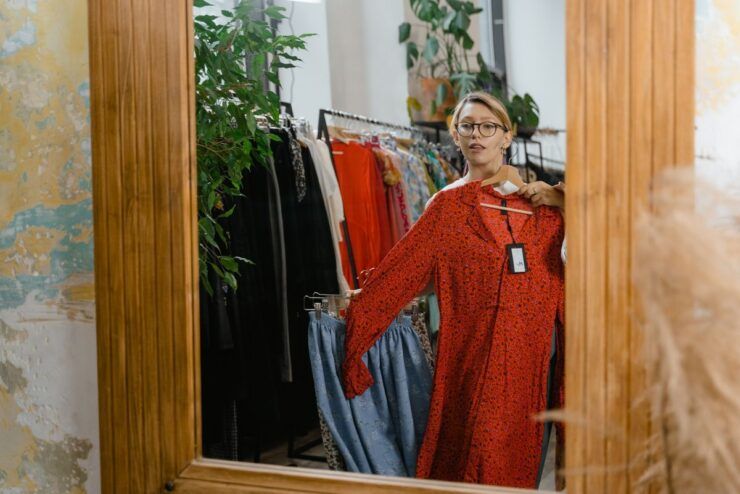
A useful final test before buying or wearing anything: notice how you actually stand and move in a piece during a fitting room mirror check, not just how it looks static. Clothes that let you move naturally and stand comfortably tend to translate into genuine confidence throughout a full day, in a way that a piece that merely looks correct in a single still reflection often doesn’t.
Key Takeaways
- Treat body shape categories as a general starting point, not a rulebook or a permanent label.
- Vertical lines and correct waist placement matter more broadly than the specific shape category.
- Prioritise genuine fit over a specific size number for a more polished, confident overall look.
- Use colour and pattern placement to support silhouette choices, not replace them.
- Comfort and personal style should always take priority over rigidly following a proportion chart.
Conclusion
Dressing for your shape is ultimately about understanding your own proportions well enough to make quick, confident choices, not memorising a strict rulebook. Once you’ve got a sense of what silhouettes work for you, our capsule wardrobe guide shows how to build a genuinely versatile collection around those choices.
And if your workplace has its own dress expectations to navigate on top of this, our piece on what to wear to work when you hate office dress codes applies a lot of the same fit and proportion principles.
Frequently Asked Questions
Do body shape categories actually apply to everyone?
Not perfectly; most people are a blend of categories or shift between them over time. They’re most useful as a general starting point for understanding your own proportions rather than a strict classification.
What’s the single most flattering styling trick regardless of shape?
Correct waist placement, wherever a garment’s narrowest point sits relative to your own natural waistline, tends to have more visual impact than almost any other single decision.
Should I avoid trends that don’t suit my “official” body shape?
Not necessarily. Most trends can be adapted through fit, layering, or accessorising to work with your proportions, rather than needing to be avoided entirely.
Does dressing for my body shape mean covering up areas I’m insecure about?
Not at all; it’s about creating the proportions and silhouette you want to project, which might mean highlighting rather than covering, depending entirely on personal preference.
How do I find my body shape if I don’t fit neatly into one category?
Most people don’t; focus instead on identifying where your body naturally carries the most and least volume, and use that general sense of your own proportions rather than forcing yourself into a single labelled category.