
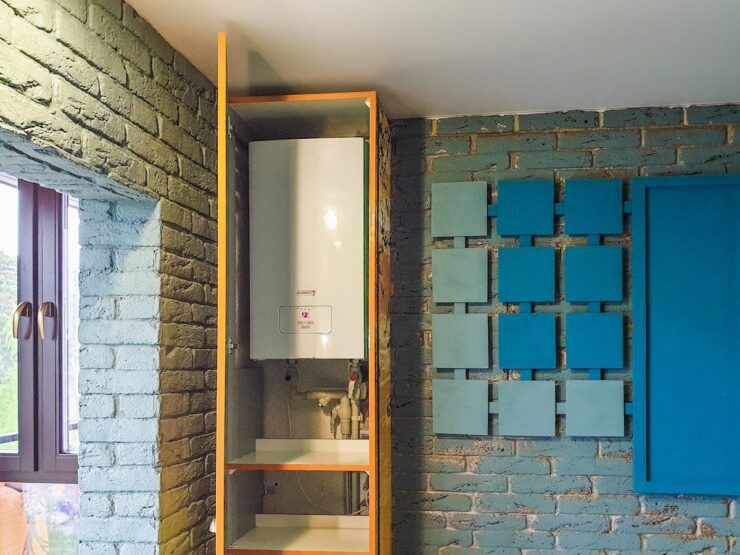
Heating installations are the core of domestic warmth in chilly areas, yet not many homeowners ever give any thought as to how they work until they cease working. Some of the UK’s best-known installations are gas boilers.
Whereas traditional boilers have been around for many years, newer condensing models represent a significant step in terms of efficiency and emissions and even design. The most well-known example is the Viessmann Vitodens line, which represents the technological evolution characterizing home heating today.
How Modern Gas Condensing Boilers Operate
Differently from older “non-condensing” boilers, which merely shot out hot exhaust gases directly through the flue, condensing boilers recover that energy and use it to preheat the water coming down to the boiler. The net effect is a smaller volume of energy required to reheat the water. The result is improved seasonal efficiency — in the majority of situations better than 90% — so more money you pay buying fuel gets translated into useful warmth.
The Vitodens line performs this rule by the use of a stainless steel heat exchanger, which transfers heat efficiently while not succumbing to corrosion. This matters in material selection because condensation produces acidic water capable of corroding less resistant metals.
Energy Efficiency and Environmental Impact
It’s not just lower gas bills — it’s also lower emissions. The gas is burned to produce carbon dioxide, and the heating system is one of the single-largest sources of a home’s emissions. Recovering waste heat using condensing models like the Vitodens reduces overall fuel use and associated environmental impacts.
Some models have combustion control systems for automatically regulating the gas–air mixture. This enables the boiler to burn efficiently irrespective of gas quality variations. Stable combustion also helps maintain efficiency and reduce emission of nitrogen oxides (NOx), a toxic atmospheric contaminant.
Practical Considerations for Homeowners
While efficiency ratings sound great in print, system selection is more than just about numbers. Homeowners need to consider the following factors:
- System Type: The combination (combi) boilers provide instant hot water and take up less space, while system or heat-only boilers employ a separate cylinder and may suit bigger households. All three forms are represented in the line of the Vitodens products, showing how technology adapts in proportion to living space.
- Size and Output: A boiler too powerful will cause the system to start and stop alternately and reduce efficiency and durability of parts. One too small won’t cope during a peak. The correct size in terms of the property’s insulation levels, floor space, and use of hot water is needed.
- Maintenance Requirements: The condensing boilers require an annual service so the heat exchanger is kept clean and the condensate drain free. Stainless steel parts may reduce the danger of corrosion but no system is fool-proof.
- Noise and Location: Quiet running allows for fitting in utility rooms or kitchens. Compact units are desirable where space is limited, but maintenance access remains a necessity.
Gas Boilers vs Heat Pumps: Pros and Cons
| Factor | Viessmann Vitodens Boiler | Ground/Air Source Heat Pump |
|---|---|---|
| Efficiency | 90–98% seasonal efficiency (high but limited by combustion) | 300–400% efficiency (produces more heat than electricity used) |
| Carbon Emissions | Emissions of CO₂ by gas combustion | No site emissions (if powered by renewables, virtually zero) |
| Installation Cost | Generally lower upfront costs | Higher upfront costs (2–3× a boiler installation) |
| Running Costs | Lower fuel cost per kWh but dependent upon gas rates | Lower long-term bill if electricity is inexpensive/clean |
| Suitability | Works with existing radiators and pipework | May require larger radiators/underfloor system for efficiency |
| Lifespan | Typically 10–15 years | Often 15–20+ years |
| Cold Weather Performance | Not affected by surrounding temperature | Efficiency lowers in very low temperatures |
| Future Ready | Some are hydrogen-ready but remain fossil-based | Aligned with decarbonisation goals |
This comparison reveals gas boilers are still a pragmatic option for many existing buildings, while heat pumps align more closely with long-term sustainability goals. The better option is contingent upon the insulation, layout of the home, and budget.
The Future of Gas Heating
It is also helpful to situate gas boiler technology in a larger energy context. The UK government is already planning a phased reduction in fossil-fueled heating in favor of low-carbon technologies like heat pumps and hybrids. Gas boilers remain predominant because they are everywhere now, less expensive at installation time, and they work with existing buildings, but newer models are even designed for renewable gases like hydrogen blends. Some Vitodens models are even hydrogen-ready tested as part of a broader industry trend.
Key Takeaways
Researching products like the Vitodens line is useful not for recommendation, but for understanding how today’s gas boilers have improved. They are much more efficient and cleaner than earlier generations, yet they still impose responsibilities: good sizing, annual servicing, and provision for a day when gas may no longer be the dominant force. Informed decisions by homeowners today can lead to lower operating costs, less repair work, and an easier shift to clean heating in the years to come.